Roads and verges
The roads here are private. The Association owns most of them, and maintains what it owns, which in practice means the people who live on them do.
Sea Lane and Middleton Road are public highways maintained by West Sussex County Council. Sea Close is not owned by the Association either.
Each private road announces itself at the entrance, and between them the signs say most of what this page says.
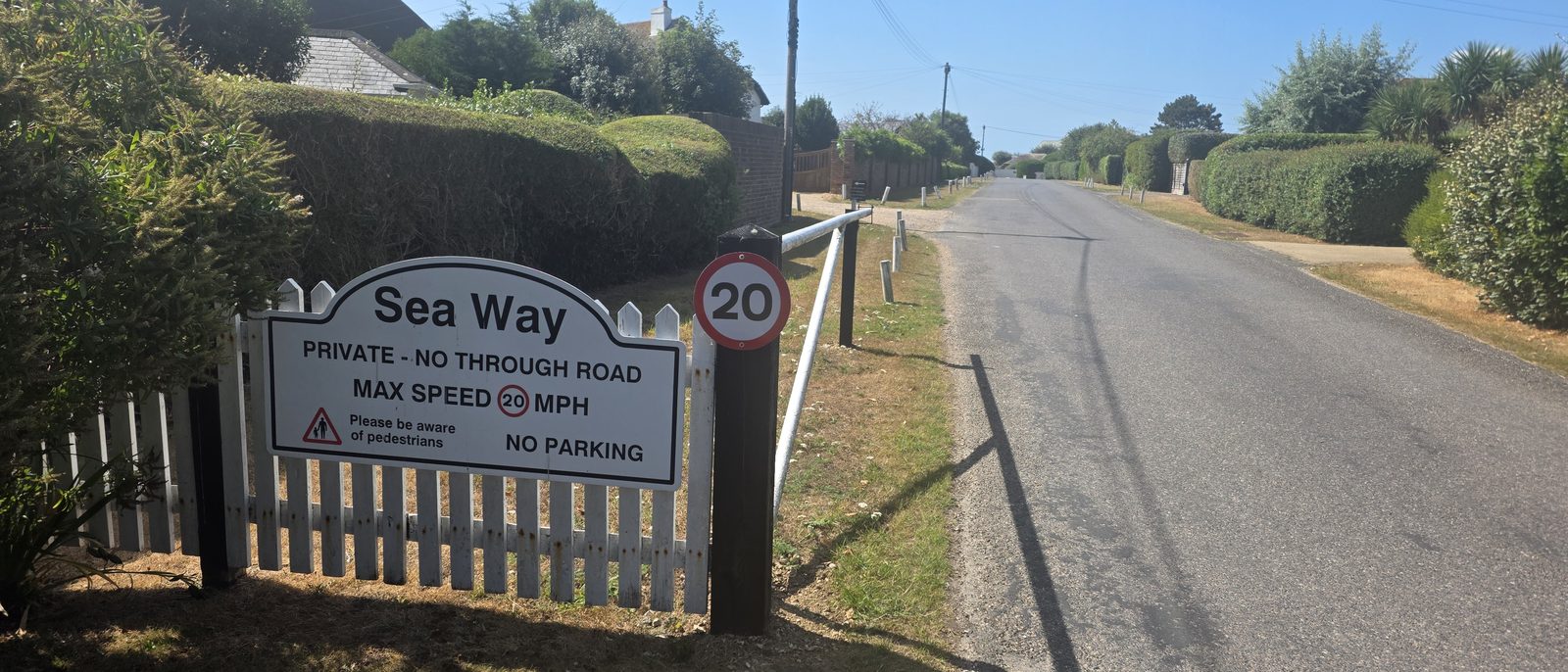
“Please be aware of pedestrians” is the important line. There are no pavements here, so people walk in the road. That is not carelessness, it is the only option, and it is why the limit is twenty, and why the same sign says no parking. See parking.
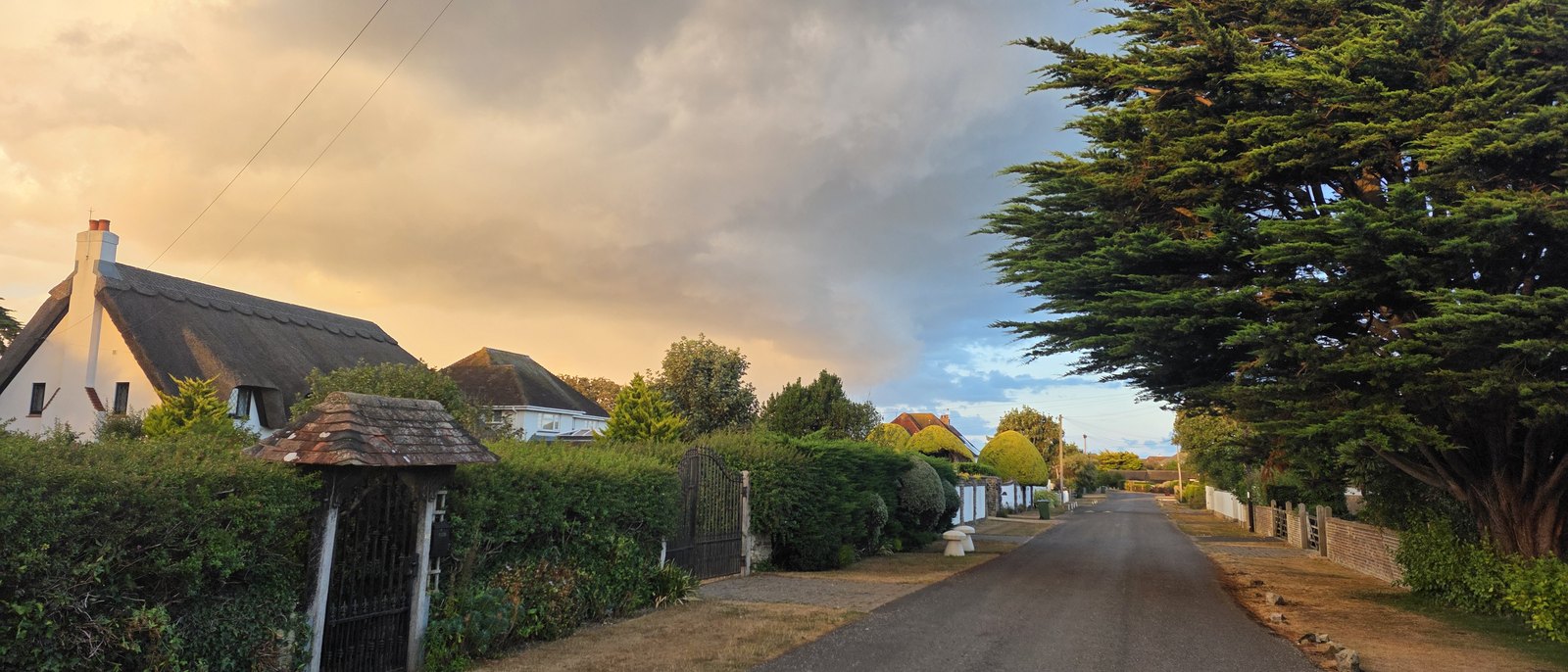
The five road groups
For managing work and spending money, the estate is divided into five groups:
- Old Point
- Sea Way
- South Walk, East Close and West Close, formally the Sea Lane Estate
- Merry End, including properties on the south side of Middleton Road with access onto Merry End
- The Byway, including properties on the north side of Middleton Road with access onto The Byway
Properties with access onto Sea Lane are also part of MOSA. The road itself belongs to the County Council, so Sea Lane properties carry the fixed element of the estate charge without a road element.
Middleton Road is a County Council road too, but properties there sit in the Merry End or The Byway groups and pay that group’s road element. What places a property in one of those groups is having a vehicular or pedestrian access onto the private road, not the road the house faces. That test is the constitution’s, not ours.
Each group holds its own ring-fenced fund. Your Road Representative can tell you where your road’s fund stands, and works with the Infrastructure Sub-Committee on repairs, drainage and verges.
Verges
The verges belong to the Association, and the estate charge does not pay for cutting them. There is no contractor and no budget line. Every verge on the estate is kept by the person who lives alongside it, which is why they look the way they do.
So we ask you to look after the stretch outside your own property: trim and cut as needed, and keep hedges and bushes from spreading over the edge.
Two good reasons to bother. It keeps everyone’s charge down, because the moment verges have to be contracted out they become a cost we all share. And the grass edge is what carries surface water off the road. Cut a verge back from the carriageway and the water has nowhere to go but into the road surface, which is the expensive part.
Driveways and accesses
If a vehicle or pedestrian access crosses the verge to reach your property, maintaining that crossing is the property owner’s job.
Widening an entrance, or adding a second one, means taking a piece of verge. We do not normally agree to that, because losing verge changes the look of the estate and reduces the ground that soaks up rainwater.
That said, cars have grown a great deal since these roads were laid out, and some residents genuinely struggle to get in and out. If that is you, talk to your Road Representative early. Most of these conversations end somewhere sensible.
Any right of way across a verge needs a formal legal agreement, a Deed of Grant, between you and the Association. See altering your driveway for how that works.
Pedestrian accesses granted by the Association should not be used in a way that could turn them into public rights of way.
Planning building work?
Heavy vehicles do real damage to road surfaces, verges and drains. Please read building work and planning and the building works charge before work starts, not after.
Who does what
The Infrastructure Sub-Committee coordinates maintenance across the estate, working with the Road Representatives and reporting to the Management Committee with cost estimates for budgeting.
Road and estate charges pay for the programme. The cost of the twittens is shared across the whole estate rather than charged to one road.